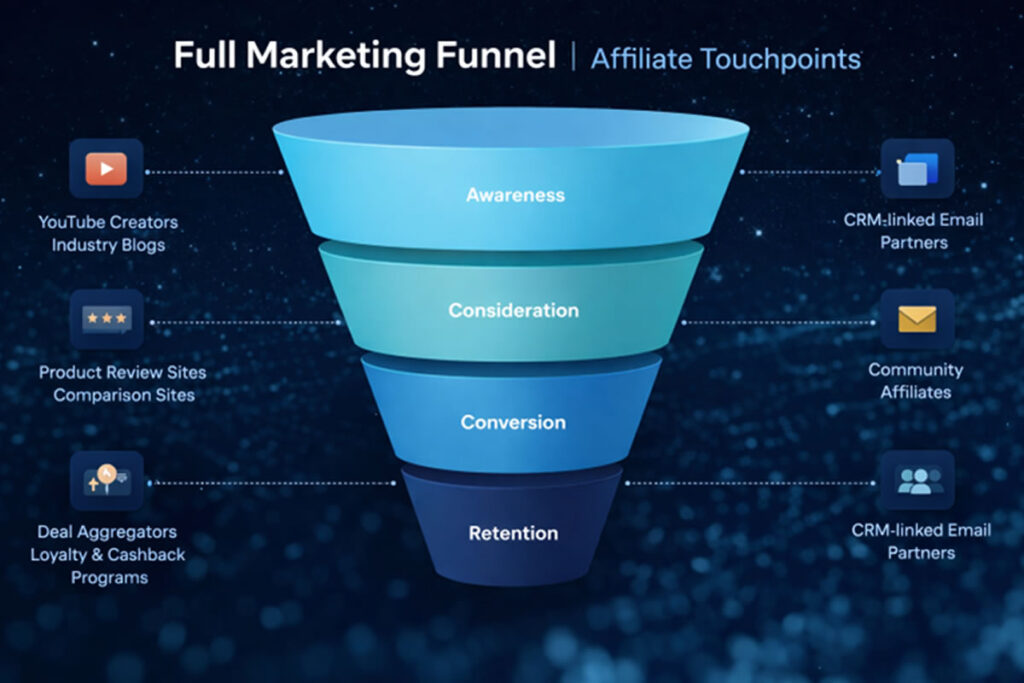

The Reality: Automation Is No Longer Optional
Marketing automation used to mean scheduling emails and setting up basic drip campaigns. Today, it means something far more powerful.
Artificial intelligence is reshaping how businesses attract, nurture, convert, and retain customers—across paid media, SEO, CRM systems, and social platforms. What was once a “nice-to-have” efficiency tool is now a competitive advantage.
According to McKinsey (2023), organisations that integrate AI into marketing and sales see measurable improvements in lead generation, personalisation, and cost efficiency. Meanwhile, Salesforce’s State of Marketing report (2023) found that high-performing marketing teams are significantly more likely to use AI-driven automation than underperforming teams.
The message is clear: automation isn’t about replacing marketers—it’s about amplifying strategic decision-making with better data and faster execution.
At Aston Media, we see this shift every day. The businesses gaining ground in 2026 are not those sending more emails or running more ads. They’re the ones building intelligent systems that continuously learn, optimise, and align marketing with revenue.
What “Marketing Automation via AI” Actually Means
Let’s clarify something important: AI-driven marketing automation is not just about chatbots or auto-scheduled posts.
It’s about systems that:
- Analyse user behaviour in real time
- Predict intent and likelihood to convert
- Personalise messaging dynamically
- Optimise budget allocation across channels
- Sync marketing and sales data automatically
- Trigger actions based on behaviour, not guesswork
Think of it as building a marketing engine that adapts without constant manual intervention.
And the impact is measurable.
Gartner (2023) reports that organisations using AI for marketing personalisation and optimisation achieve higher campaign effectiveness than those relying solely on rule-based automation.
Where AI Automation Delivers the Most Impact
Let’s break this down across the core channels Aston Media focuses on.
1. AI in Paid Ads (PPC): Smarter Budget Allocation
Paid advertising has evolved rapidly. Platforms like Google and Meta already use machine learning at their core. But many brands still use them reactively instead of strategically.
AI-driven automation helps:
- Adjust bids dynamically based on conversion probability
- Identify high-intent audience segments
- Optimise creatives using performance signals
- Allocate budget across campaigns based on ROI trends
According to Google’s Economic Impact Report (2023), advertisers using automated bidding strategies often see improved conversion performance compared to manual bidding approaches.
The key shift?
Stop managing ads manually. Start managing the strategy that feeds the algorithm.
AI works best when paired with clean data, structured campaigns, and clear conversion goals. That’s where strategic oversight matters.
2. AI in SEO & Content: From Guesswork to Intent-Led Strategy
SEO is no longer just keyword research and backlinks. Search behaviour is evolving, especially with AI-powered search interfaces influencing discovery.
AI tools now help marketing teams:
- Identify emerging search intent patterns
- Analyse content gaps at scale
- Predict which topics will drive high-value traffic
- Optimise content clusters automatically
- Detect technical SEO issues faster
According to HubSpot’s State of Marketing (2023), marketers who prioritise blogging and SEO are significantly more likely to report positive ROI.
But the real advantage isn’t producing more content—it’s producing the right content.
AI can surface patterns, but human strategy ensures relevance, brand alignment, and authority positioning.
Automation enhances insight. It doesn’t replace expertise.
3. AI in CRM & Sales Automation: Aligning Marketing with Revenue
This is where AI-driven automation becomes transformational.
Modern CRM systems now integrate predictive analytics, lead scoring, and behavioural triggers. Instead of handing over raw leads to sales teams, marketing can now deliver:
- AI-based lead scoring models
- Automated lifecycle segmentation
- Personalised nurture sequences
- Sales alerts triggered by high-intent actions
- Predictive churn signals
According to Salesforce (2023), high-performing sales teams are significantly more likely to use AI-driven insights within their CRM systems.
The result?
Shorter sales cycles.
Higher conversion rates.
Less friction between marketing and sales.
And most importantly, measurable revenue impact.
4. AI in Social Media: From Posting to Performance Intelligence
Social media automation used to mean scheduling posts in advance. Today, it includes:
- Predicting best posting times
- AI-assisted content ideation
- Performance-based creative optimisation
- Automated comment sentiment analysis
- Lookalike audience modelling
According to Deloitte’s Digital Media Trends (2023), digital channels continue to dominate consumer attention across demographics.
But attention doesn’t equal conversion.
AI enables social media to move from awareness-only to measurable contribution within a broader performance ecosystem.
The Business Case: Why AI Automation Matters in 2026
Here are the five biggest drivers pushing marketing automation forward:
1. Rising Customer Acquisition Costs
Paid media is becoming more competitive. Automation helps protect margins through smarter targeting and budget allocation.
Implication: Efficiency is no longer optional—it’s a matter of survival.
2. Privacy-Driven Targeting Changes
With cookie deprecation and data regulations evolving, first-party data is critical.
Implication: CRM-linked automation becomes central to sustainable growth.
3. Multi-Channel Buyer Journeys
Customers now interact across search, social, email, and ads before converting.
Implication: Automation must unify touchpoints, not operate in silos.
4. Demand for Personalisation
According to McKinsey (2021), personalisation can drive revenue uplift and improve marketing ROI.
Implication: Static messaging won’t compete in a dynamic marketplace.
5. Speed of Decision-Making
Marketing teams must act in real time.
Implication: Manual reporting cycles are too slow for a competitive advantage.
A Practical Playbook for Implementing AI Marketing Automation
Here’s how growth teams can approach automation strategically.
1. Start with Unified Data
Integrate paid ads, SEO, CRM, and social reporting into one performance view.
Metric to track: Cost per acquisition (CPA) across channels
Common mistake: Automating fragmented systems
2. Define Revenue-Aligned KPIs
Don’t automate for clicks. Automate for pipeline and revenue.
Metric to track: Marketing-qualified leads (MQLs) → Sales-qualified leads (SQLs) conversion rate
Common mistake: Optimising vanity metrics
3. Implement Predictive Lead Scoring
Use behaviour-based scoring instead of simple form completions.
Metric to track: Close rate by lead score tier
Common mistake: Overcomplicating scoring models early on
4. Automate Personalisation Across Lifecycle Stages
Segment by awareness, consideration, and retention.
Metric to track: Email engagement by segment
Common mistake: Sending identical messaging to all users
5. Run Incrementality Tests
Test whether automation truly drives additional revenue.
Metric to track: Lift vs control group
Common mistake: Assuming automation equals incremental growth
6. Maintain Human Oversight
AI optimises patterns—but strategy must guide direction.
Metric to track: Quarterly ROI trends
Common mistake: “Set and forget” automation
Measuring What Matters
AI-based automation requires smarter attribution.
A balanced approach includes:
- Multi-touch attribution models
- Controlled experiments
- Blended performance reporting
- Revenue forecasting models
No single metric tells the full story. The goal is alignment between marketing activity and business outcomes.
Governance also matters:
- Ensure compliance with data privacy regulations
- Monitor for fraudulent traffic or ad waste
- Maintain brand consistency across automated campaigns
Automation without governance creates risk.
Automation with structure creates scale.
When to Work with a Specialist
There are scenarios where internal teams hit complexity limits:
- Expanding into new markets
- Integrating multiple platforms and CRMs
- Scaling paid media across regions
- Building predictive models
- Aligning marketing and sales automation
In these situations, partnering with a performance-focused agency can accelerate results while reducing costly missteps.
A strong partner should provide:
- Strategic framework
- Cross-channel integration
- Data-backed recommendations
- Transparent reporting
- Continuous optimisation
Not just implementation—but guidance.
What You Can Do in the Next 90 Days
Here’s a focused roadmap:
- Audit your current automation stack and identify integration gaps.
- Align marketing KPIs with revenue—not just traffic or engagement.
- Implement at least one predictive or AI-driven optimisation layer in paid ads or CRM.
- Set up cross-channel reporting dashboards.
- Schedule a strategic review of automation maturity and growth potential.
Final Thoughts
Marketing automation via AI is not about replacing human insight—it’s about elevating it.
The brands winning in 2026 are those that combine intelligent systems with strategic clarity. They don’t automate everything. They automate the right things.
If you’re evaluating how AI-driven marketing automation can scale your paid media, SEO, CRM, or social strategy, the next step is a structured roadmap—not more tools.
Book a strategy call with Aston Media to assess where automation can drive measurable growth for your business. Let’s build a system that works as intelligently as your ambition demands.